Email Marketers: 6 Short Link Rules for Deliverability and Privacy
Email Marketers: 6 Short Link Rules for Deliverability and Privacy
Short links do not automatically hurt deliverability, but the wrong kind will. Public shorteners with shared, unmanaged domains are a well documented risk because spam filters treat them as a common phishing pattern. Branded tracking domains, short redirect chains, and HTTPS destinations are generally safe because they let filters evaluate a domain reputation that belongs to you, not to thousands of strangers sharing a free shortening service.
TL;DR:
- Sharing public shorteners with unmanaged domains significantly increases deliverability risk because filters associate them with spam and phishing patterns.
- Using branded tracking domains with HTTPS, a single redirect hop, and matching anchor text improves trust and reduces suspicion in spam filters.
- Setting up a custom branded short domain and limiting redirects to one hop is the most effective way to safeguard inbox placement.
- Pre-send testing, including redirect path checks and spam scans, helps detect link issues that could harm campaign deliverability.
- Transitioning from public to private short links requires domain warming and careful monitoring of engagement metrics to ensure consistent deliverability.
Table of Contents
- How Spam Filters Evaluate Short Links Email Deliverability Signals
- Why Public URL Shorteners Carry Outsized Deliverability Risk
- Safer Ways to Use Short Links in Email Campaigns
- Pre-Send Checks and Fixes for Link-Related Deliverability Problems
- Why a Privacy-First Approach to Short Links Actually Helps
- Get Deliverability-Safe Short Links Without the Setup Headache
- Sources
- FAQ
How Spam Filters Evaluate Short Links Email Deliverability Signals
Every link in a message gets inspected before the message lands anywhere. Filters don’t just scan for keywords anymore. They trace the actual path a link takes and score what they find.
Here’s what they’re checking:
- Domain reputation. Each domain a link touches, including every redirect hop, gets weighed against that domain’s sending history. A single bad actor on a shared domain can drag down everyone else using it.
- Redirect chain length. One redirect from a tracking domain to your landing page is normal. Three or four hops through unrelated domains looks like link laundering, a pattern Gmail’s link safety guidance explicitly flags for evaluation.
- Visible text versus href mismatch. When the anchor text reads “yourcompany.com” but the actual href points somewhere else entirely, that’s a classic phishing heuristic. Gmail checks for this directly.
- HTTPS versus HTTP. Insecure links raise suspicion in both mail clients and browsers now, and mixed protocols within the same message are a red flag.
Your email service provider (ESP) usually rewrites links for click tracking before send. That rewrite determines which domain filters actually see, which is exactly why the reputation of your tracking domain matters as much as the reputation of your sending domain. Litmus’s content-signal testing found that link patterns, not just copy, are a recurring cause of unexplained inbox placement drops.
Why Public URL Shorteners Carry Outsized Deliverability Risk
Spammers have used free shorteners to hide malicious destinations for years, and filters have adapted accordingly. SMTP2GO’s deliverability research points to this as one of the main reasons public shorteners get flagged more often than branded domains carrying identical content.
The mechanics are straightforward:
- A shortener domain is shared across potentially millions of unrelated senders, so its reputation is really an average of everyone’s behavior, good and bad.
- One bad campaign from another customer on that same shortener can lower the domain’s standing for every legitimate marketer using it that week.
- Automated scoring systems look for clusters of shortened links, multiple redirect hops, and mismatched anchor text together. Any one of these alone might pass. Stack two or three, and the message gets scored as suspicious.
Public shorteners are a particular liability in cold outreach, where spam and phishing patterns get flagged more aggressively than in permission-based sending, according to SMTP2GO’s analysis.
None of this means every short domain is risky. A branded short domain with a clean sending history, one redirect hop, and enforced HTTPS behaves like any other trusted domain because filters are evaluating your reputation, not a stranger’s.

Safer Ways to Use Short Links in Email Campaigns
You don’t have to give up short, clean links to protect deliverability. You just have to own the domain doing the shortening.
- Set up a branded tracking subdomain. CNAME a subdomain like links.yourbrand.com to your ESP, or self-host it, so click data builds reputation under your own name instead of a shared vendor domain. Deliverability teams consistently point to this as the single highest-leverage fix, an approach Iterable’s link tracking documentation also recommends for exactly this reason.
- Cap redirects at one hop. Tracking domain to final destination, nothing in between. Every extra hop is another domain filters have to evaluate and another chance to trip a heuristic.
- Force HTTPS everywhere. Both the tracking link and the destination page need a valid certificate. No exceptions.
- Match anchor text to destination. Descriptive text like “view your invoice” tied to a link that actually goes to your invoicing page reads as legitimate. A raw, unrelated URL as visible text does not.
- Limit link density relative to message length. A short promotional email with a dozen links looks like link spam regardless of where those links point. Give each link room and context.
- Choose your rewriting layer deliberately. If your ESP has a strong, established tracking domain reputation, native ESP link rewriting is often the safer default over routing everything through a separate analytics stack layered on top.
Pro Tip: Before you standardize on a tracking domain, send a test campaign to a seed list and check whether any links resolve through more hops than you expect. ESPs occasionally add their own redirect layer on top of yours without flagging it.
If you want a deeper walkthrough of domain setup and anchor text hygiene, Rdyrct’s guide on short link best practices covers the setup steps in more detail.
Pre-Send Checks and Fixes for Link-Related Deliverability Problems
Catching a link problem before you send a full campaign is far cheaper than fixing your sender reputation after the fact.
- Trace every link manually. Click each one, count the redirect hops, and confirm both the tracking domain and destination load over HTTPS. Two hops maximum, ideally one.
- Run a pre-send spam test. Tools like Mail-Tester give you a fast content and link scan before the campaign goes out to your full list.
- Check linked domains against blocklists. Query your tracking and destination domains through URIBL and SURBL to confirm neither has landed on a blocklist you don’t know about.
- Use seed lists for inbox placement. Send to test addresses across Gmail, Outlook, and Yahoo, then compare placement results before and after any change to your link setup. Digistrat’s monitoring guidance treats this as standard QA, not an optional extra.
- Warm new tracking domains gradually. If you’re migrating off a public shortener, ramp send volume on the new branded domain instead of switching all traffic at once.
- Watch your metrics after the switch. Track bounce types, spam complaint rates, Sender Score, and any sudden shift in open or click ratios that doesn’t match your normal campaign pattern.
Why a Privacy-First Approach to Short Links Actually Helps
A privacy-first approach suggests that privacy and deliverability can align rather than conflict. A branded short-link setup that skips IP storage still gives you the referrer and device data that matters for campaign decisions, without adding the third-party exposure a public shortener carries.
Self-hosting or running a custom domain means warming a new domain’s reputation, real work most teams underestimate. But that work replaces a permanent risk you can’t control (a shared shortener’s reputation) with one you own outright.
— Andrea
Get Deliverability-Safe Short Links Without the Setup Headache
This URL shortening service emphasizes HTTPS everywhere, redirect chains kept to a single hop, and custom domain support so links carry your own reputation instead of a stranger’s.
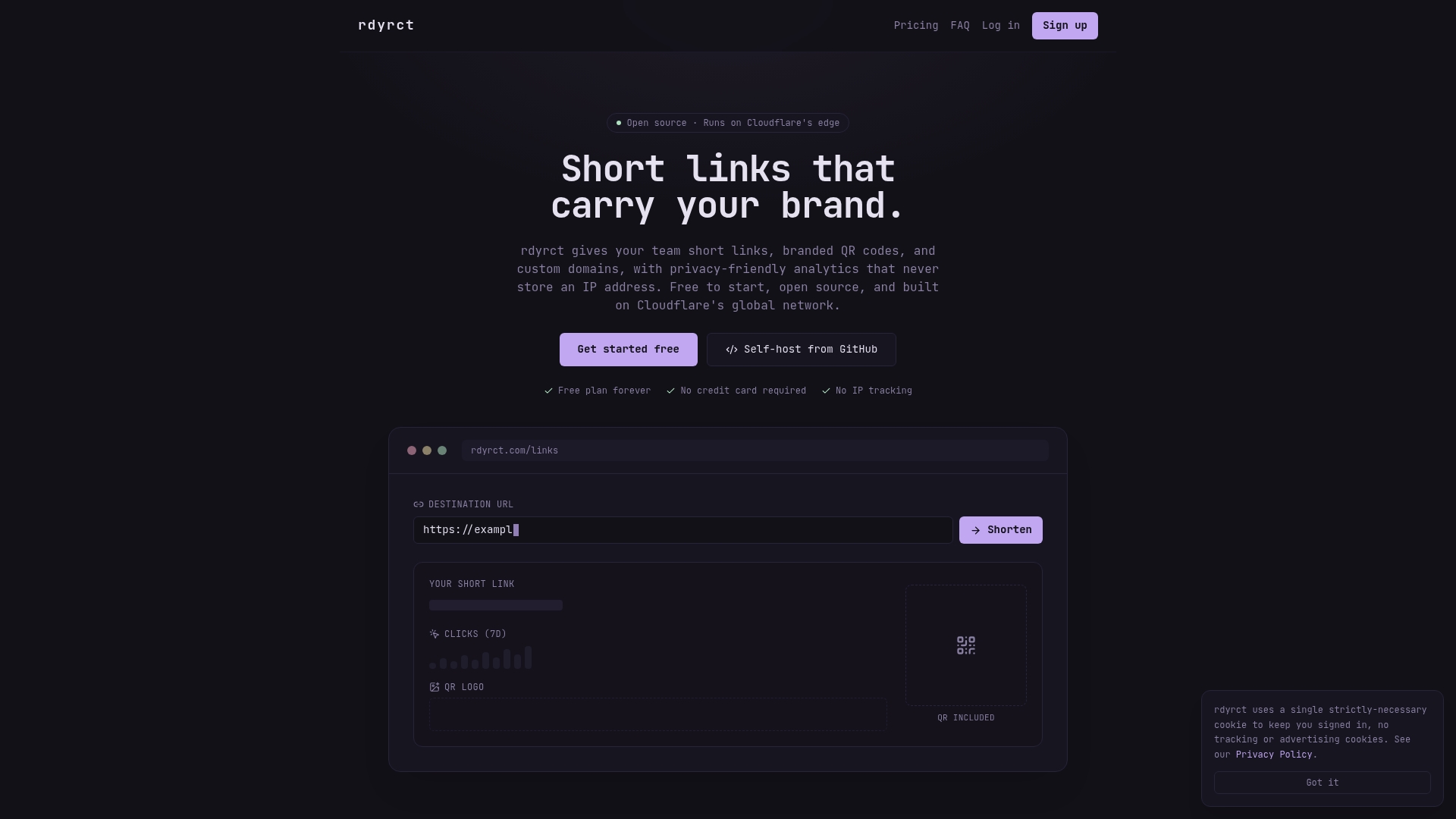
Links can run through your own branded domain, with click analytics designed to avoid storing IP addresses, and QR codes are available for routing print or offline traffic to the same destinations. Setup means pointing a domain you already own, not migrating your whole sending infrastructure. If you’re moving off a public shortener, start with the free plan and set up your branded domain before your next send, so warming starts well ahead of your busiest campaign.
Sources
- Protecting users from harmful links - Gmail Help
- How email content may be killing your deliverability - Litmus
- Why You Should Rethink URL Shorteners in Emails - SMTP2GO
- Email Link Shortening and Click Tracking - Iterable Support
FAQ
Do Short Links Hurt Email Deliverability?
Public shorteners with shared, unmanaged domains raise deliverability risk because filters associate them with spam and phishing patterns. A branded tracking domain with HTTPS and a single redirect hop, the kind Iterable’s documentation describes, is generally treated as safe.
Is It Legal to Shorten a URL?
Yes, shortening a URL is legal on its own. The legal risk comes from what the link is used for, such as disguising a phishing destination or violating a platform’s terms of service, not from the act of shortening itself.
What Is the 30/30/50 Rule for Cold Emails?
This isn’t a standardized industry rule with one fixed definition, and it varies by source. Some marketers use it to describe splitting cold email effort across list quality, subject line testing, and body copy, but treat any specific breakdown you see as a rough guideline rather than a settled standard.
What Does the 3-21-0 Email Rule Mean?
Definitions of this rule vary across the industry and it isn’t tied to a single authoritative source. Treat any specific numeric interpretation you encounter with caution rather than as an established deliverability standard.
How Do I Test If My Email Links Are Hurting Deliverability?
Trace each link’s redirect path, confirm HTTPS on every hop, and run the message through a pre-send spam checker like Mail-Tester before your full send. Following up with a seed list test across major providers, as outlined in Digistrat’s deliverability monitoring guide, catches placement issues a single test inbox will miss.