Short Link Security: Check Any Link in 15 Seconds
Short Link Security: Check Any Link in 15 Seconds
Most short links are harmless, but the format itself is the problem: it hides the destination until you click, which is exactly what phishing and malware campaigns count on. The fix takes fifteen seconds. Expand the link with a preview tool or unshortener, scan the resulting URL with something like VirusTotal, and only then decide whether it’s worth your click.
TL;DR:
- Short links conceal the final destination, making it difficult to assess safety without expanding or scanning the URL first.
- Attackers exploit short links through disguised phishing, drive-by downloads, link rotation, and multi-hop cloaking techniques.
- Using native preview options, standalone expanders, and security tools like VirusTotal reduces the risk of clicking malicious short URLs.
- Links with more than two redirects, newly registered domains, or unusual protocols should trigger suspicion and warrant further inspection.
- Implementing branded domains, regular link health checks, and minimal data collection enhances security and privacy for short link systems.
Table of Contents
- What Short Link Security Actually Protects Against
- How Attackers Turn Short Links Into Weapons
- How to Reveal a Short Link Before You Trust It
- Warning Signs Security Tools Watch For
- A Practical Safety Checklist for Sending and Receiving Short Links
- Why Operators Bear Half the Responsibility
- Why Privacy Design and Security Design Are the Same Problem
- How Rdyrct Approaches Short Link Security
- Sources
- FAQ
What Short Link Security Actually Protects Against
A URL shortener works by mapping a random token, like rdyrct.com/x7Ak2, to a full destination stored on a server somewhere. When you click, the shortener looks up that token and redirects you. That lookup step is invisible to you and, often, to the spam filters and link scanners standing between you and the destination. Neither a human glancing at a link nor a basic email filter can tell where bit.ly/3xR9k2 actually leads without following it.
That blind spot is the whole appeal for attackers. A well-known shortener domain carries borrowed reputation. A phishing link riding on a trusted brand’s shortener slips past filters that would flag a raw, sketchy domain on sight. The Kaspersky research on short link privacy and security notes that shorteners also introduce a privacy cost most people never think about: every click routes through a third-party server that can log timestamps, referrers, device type, and IP addresses before you ever reach the real page.
That combination creates three separate concerns worth tracking:
- Visibility loss — you can’t judge a destination you can’t see.
- Borrowed trust — a reputable shortener domain masks a malicious final page.
- Data exposure — the shortener itself becomes a silent collector of your click activity.
How Attackers Turn Short Links Into Weapons
Attackers don’t use short links because they’re clever. They use them because the format does the concealment work for free. The tactics fall into a handful of repeatable patterns.
- Disguised phishing pages. A short link opens a login page that looks identical to your bank, your email provider, or your company’s SSO portal, sometimes with your email address pre-filled to look more convincing.
- Drive-by downloads. Instead of a page, the link triggers an immediate file download, often disguised as an invoice, resume, or shipping label with a
.zip,.exe, or macro-enabled document extension. - Link rotation. The same short URL points to a different destination over time, so a link that was safe yesterday can serve malware today. Industry monitoring in the APWG trends report documents this rotation as a standard technique for prolonging phishing campaigns past initial takedowns.
- Multi-hop cloaking. Instead of one redirect, the link chains through several intermediate domains before landing on the real target, which is designed specifically to confuse both automated scanners and manual inspection.
Recognizing the pattern matters more than memorizing any single trick, because attackers rotate techniques faster than most blocklists update.
How to Reveal a Short Link Before You Trust It
You don’t need special software to see where a short link goes. Most major shorteners build a preview option directly into their URL structure. Add a plus sign to the end of a Bitly link (bit.ly/example+) or swap in preview.tinyurl.com for a TinyURL link, and you’ll see the destination without triggering the redirect, according to guidance from the University of Michigan’s Safe Computing team.
If the shortener doesn’t offer a native preview, a standalone expander does the same job. Tools like Unshorten.it or CheckShortURL take the short link and return the full destination, and better ones show you every hop along the way rather than just the final address.
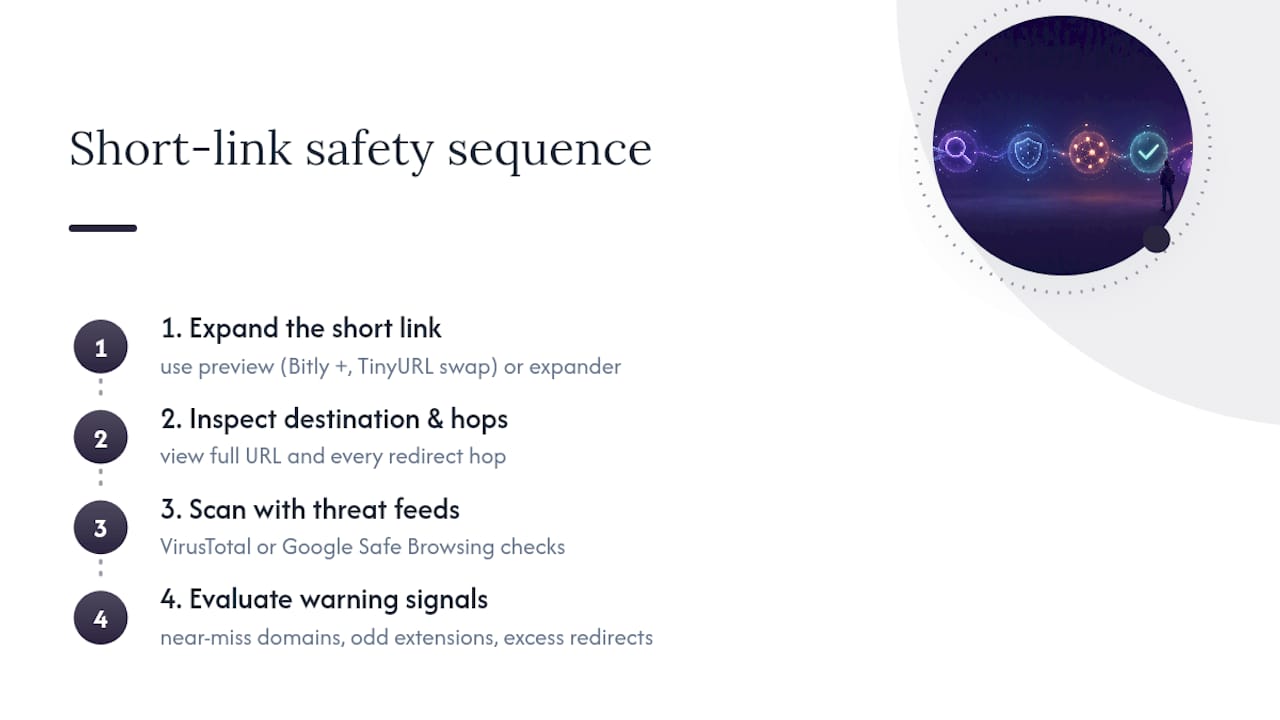
Once you have the real URL, paste it into VirusTotal or check it against Google Safe Browsing. Both cross-reference the destination against threat intelligence feeds from dozens of security vendors. MakeUseOf’s testing on short link safety recommends this exact sequence: expand first, then scan, because a clean-looking domain can still host a malicious payload that only a dedicated scanner will catch.
Pro Tip: A domain with zero flags on VirusTotal isn’t a guarantee of safety. Newly registered malicious domains often haven’t been indexed yet. Treat “no flags” as a good sign, not a green light.
Even after expanding, some signals should stop you cold: a destination domain that’s a near-miss spelling of a real brand, an unexpected file extension, or a redirect chain with more hops than the context justifies.
Warning Signs Security Tools Watch For
IT teams and security scanners don’t judge a short link on gut feeling. They look for a specific set of technical tells that separate routine marketing links from abuse.
- Hop count. Legitimate short links usually resolve in one or two redirects. Anything beyond two or three hops is a common cloaking pattern designed to dodge automated inspection, as the CaptainDNS breakdown of shortener abuse points out.
- Domain age. A destination domain registered days or weeks ago, checked through a WHOIS lookup, is a strong signal of a throwaway phishing site rather than an established business.
- Protocol and parameter anomalies. A downgrade from HTTPS to HTTP mid chain, an open redirect parameter, or oddly encoded query strings are all patterns attackers exploit deliberately.
- Automation fingerprints. Bulk-created links with short, low-entropy codes (
/a1,/b2) and a sudden traffic spike from one source often point to an automated abuse campaign rather than organic sharing.
Pro Tip: If you manage a shortener for your team, sample a handful of recently created links each week. Automated abuse tends to show up in bursts, not one link at a time, so a small sample catches patterns a single review would miss.
A Practical Safety Checklist for Sending and Receiving Short Links
Whether you’re the one clicking or the one sharing, a few habits cut most of the risk without adding real friction.
- If you receive one: expand it first, scan the destination, and confirm the sender actually meant to send it, especially if the message feels slightly off in tone or timing.
- Never log in through a short link. Legitimate services almost never ask you to authenticate by clicking a shortened URL in an email or text.
- If you’re sharing one: use a branded or custom domain instead of a generic shortener when the link leads to a login page or payment form, and pair it with descriptive link text so the recipient has context before they click. Rdyrct’s short link best practices guide covers how to make destinations clear without exposing the full raw URL.
- Report it. If a short link looks suspicious, report it to the platform it arrived on (email provider, messaging app, or social network) and flag it internally if it came through a work channel. Most platforms have a one-click “report phishing” option that feeds directly into their filtering systems.
Why Operators Bear Half the Responsibility
Individual vigilance only goes so far when the shortener itself has weak defenses. Responsible operators build protection in at the platform level, not just at the click level.
That starts with validating and scanning a destination before the short link goes live, not after someone reports it. High-entropy short codes and rate limits on bulk creation make automated abuse far harder to scale, a point the developer’s guide to securing shortened URLs makes clear.
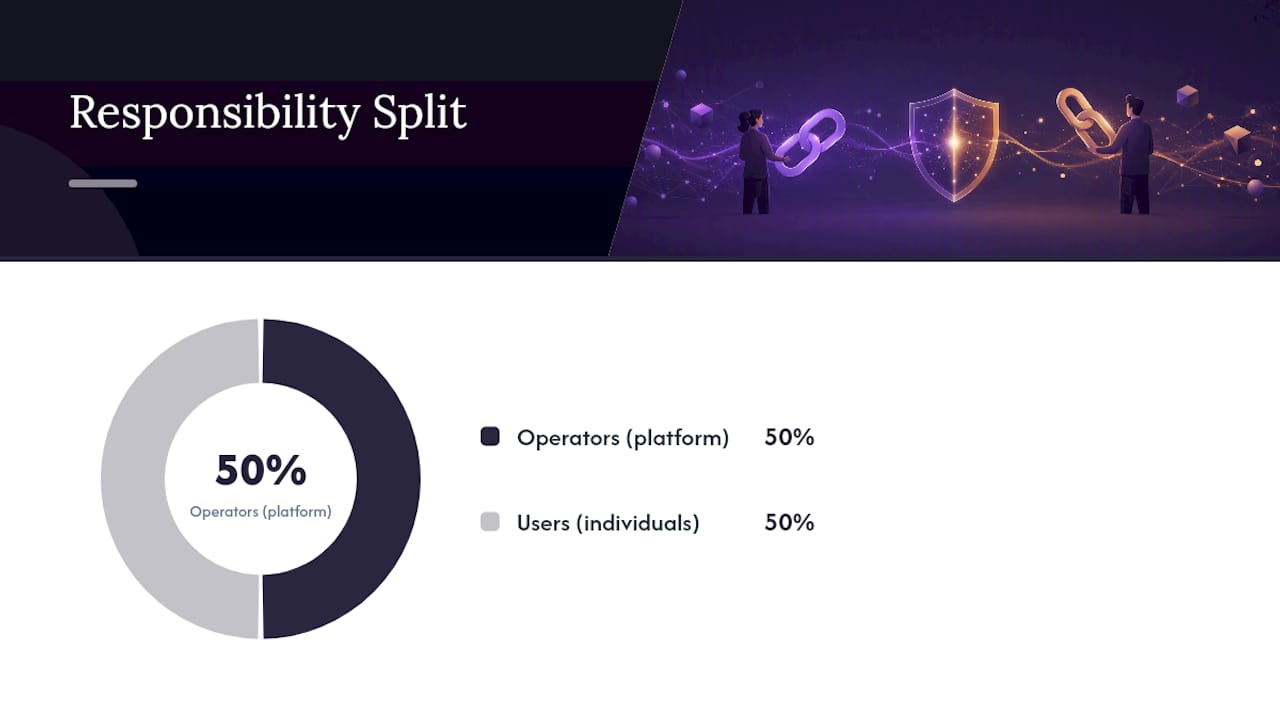
Data minimization matters just as much as abuse prevention. Rdyrct’s analytics track country, referrer, and device type without ever storing IP addresses, which limits what a breach or a subpoena could expose while still giving marketers useful click data.
Operational hygiene rounds it out:
- Require authenticated accounts for link creation, not anonymous free-for-all access.
- Run regular health checks on existing links to catch destination swaps.
- Use short cache TTLs and tag-based invalidation for user-generated destinations, so a malicious redirect doesn’t linger in a CDN cache after it’s been pulled, a practice detailed in Snyk’s guide to cache poisoning.
Why Privacy Design and Security Design Are the Same Problem
Most people treat privacy and security as separate concerns. They aren’t, at least not for short links. A branded domain with a transparent preview does double duty: it reduces the social engineering surface because recipients see context before they click, and it signals the operator has nothing to hide about the destination, which is why using Smart QR codes and branded links is important in campaigns. Minimizing collected identifiers and setting short TTLs on user-generated links accomplishes something similar from the operator’s side. Less stored data means less to leak, less to subpoena, and less incentive for an attacker to target the shortener itself.
— Andrea
How Rdyrct Approaches Short Link Security
Some short link services offer privacy-first analytics that track country, referrer, and device data without logging IP addresses, providing reporting useful for marketers without extensive surveillance.
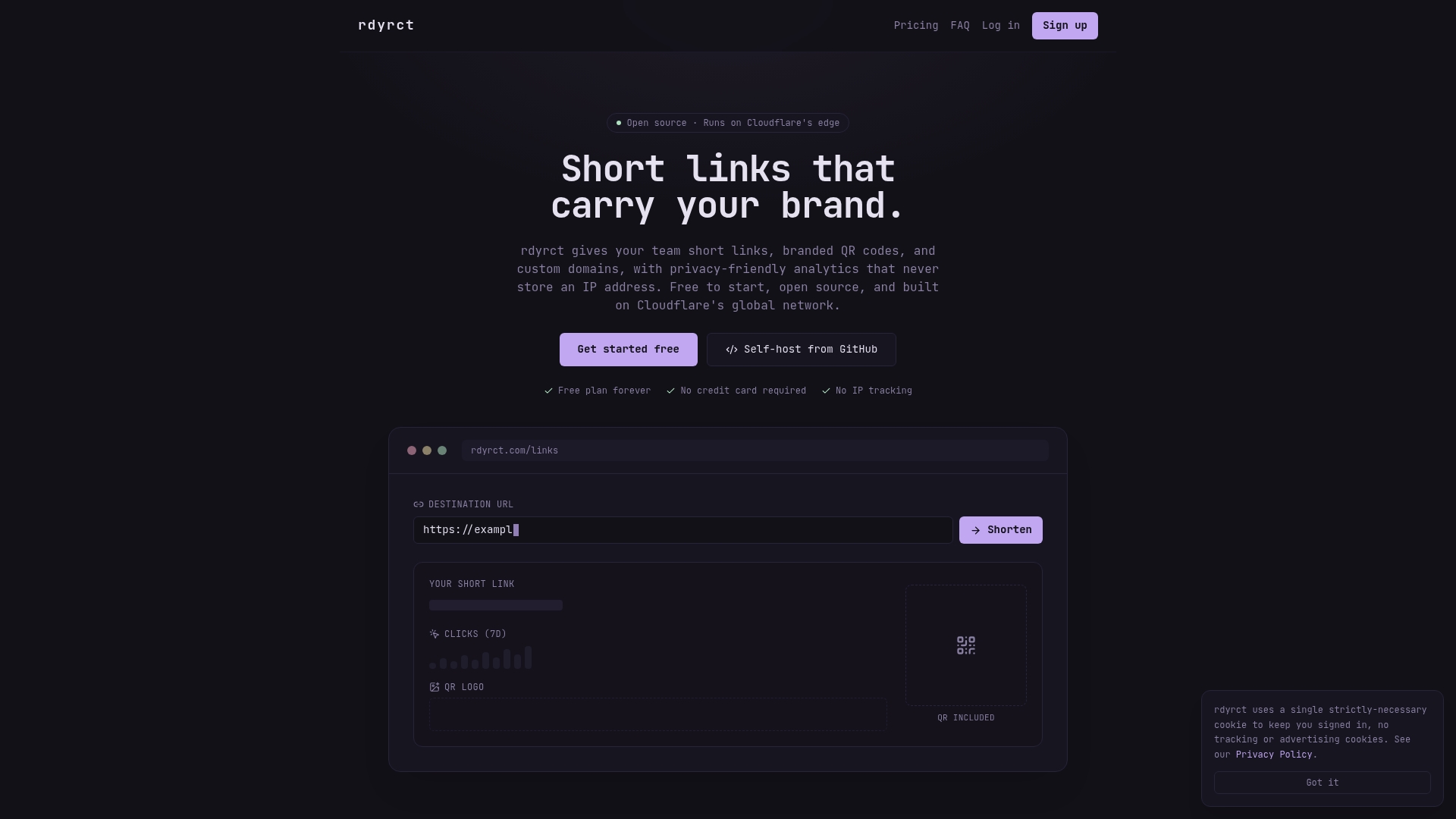
Custom domains give your audience a recognizable destination instead of a generic string of characters, which can help reduce social-engineering risk on links. Link health monitoring can help flag broken or swapped destinations before they become a support ticket or a security incident. All of it is available starting on a free forever plan, with paid tiers unlocking branded QR codes and extended analytics history for teams that need more. If you’re ready to move off a generic shortener, set up your first branded short link and see the difference a privacy-first design makes.
Sources
- Safecomputing
- Don’t Click That Short Link Until You’ve Made Sure It’s Safe
- The 6 URL Shorteners You Didn’t Know Were Helping … (CaptainDNS summary)
- APWG trends report Q4 2025
- Privacy and security threats of short links | Kaspersky blog
FAQ
Is a short link safe to click?
It depends entirely on the destination, not the shortener itself. Expand the link and scan the final URL with a tool like VirusTotal before you decide, since the format itself offers no built-in guarantee of safety.
How does a short link actually work?
A shortener stores a mapping between a short token and a full destination URL, then redirects your browser to that destination when you click. This lookup step is what creates the visibility gap attackers exploit.
Is TinyURL safe and legal?
TinyURL is a legitimate, widely used service, and using it is entirely legal. Safety depends on what the person creating the link points it to, which is why previewing with preview.tinyurl.com before clicking is worth the extra step.
How do people bypass or reveal what’s behind a short link?
Add a preview modifier where the shortener supports one (like Bitly’s trailing “+”), or paste the link into a standalone expander like Unshorten.it or CheckShortURL to see the full redirect chain. This step comes before any security scan, not instead of one.