Link Permissions Management: Privacy First, OWASP/NIST for Marketers
Link Permissions Management: Privacy First, OWASP/NIST for Marketers

Link permissions management means controlling who can create, edit, view, or analyze the short links, branded links, and QR codes inside a URL-shortening platform. The baseline that works: apply least privilege to every role, enforce authorization on the server rather than trusting the interface, treat analytics as its own permissioned resource, and log security-relevant events without storing IP addresses or unnecessary personal data.
TL;DR:
- Short links carry sensitive campaign data and click history that can reveal strategic information, requiring strict access controls.
- Authorization must be enforced on the server side for all actions, including bulk and background processes, to prevent bypasses.
- Permissions should be scoped by resource and role, with automated account lifecycle management to avoid lingering access privileges.
- Audit logs must log only event types, timestamps, and actors without personal data or IP addresses, and require protection against tampering.
- Regular permission reviews should be triggered by organizational changes, not arbitrary schedules, to prevent permission decay over time.
Table of Contents
- Why link permissions are a distinct problem
- Security and privacy principles from OWASP and NIST
- Common permission models and role examples
- A practical implementation checklist
- Logging, audit trails, and retention done right
- Reviews, testing, and privacy-first operational habits
- Balancing usability with security
- How rdyrct supports privacy-first link permissions
- Sources
- FAQ
Why link permissions are a distinct problem
A short link is not just a redirect. It carries campaign metadata, UTM parameters, and a click history that can reveal which channel a competitor’s launch is running through. Treating link access like generic document sharing misses three risks specific to this category.
- Links double as campaign artifacts, so exposing one can leak strategy, not just a URL.
- Short-link IDs are often sequential or guessable, which makes horizontal access flaws like IDOR and BOLA a live concern, not a theoretical one.
- Analytics exports can contain granular click, referrer, and device data that deserves the same scrutiny as the links themselves.
A platform that gets link creation right but leaves analytics wide open has only solved half the problem.
Security and privacy principles from OWASP and NIST
Two standards bodies have already done the thinking here, and their guidance maps cleanly onto short-link platforms. The OWASP ASVS access control guidance calls for least privilege across functions, data, and URLs, plus protection against horizontal access and vertical privilege escalation everywhere a request can reach, including bulk actions and background jobs. The OWASP Authorization Cheat Sheet frames least privilege as two separate problems: vertical privilege levels and horizontal resource separation, meaning “can create a link” and “can read another team’s link” are different questions entirely.
- Avoid all-or-nothing admin roles; split capabilities by function and resource type.
- Enforce authorization server-side across the dashboard, API, bulk actions, exports, QR code management, and background jobs.
- Document the decision factors behind every rule (organization, workspace, domain, link owner) so the policy can be tested, not just assumed.
- Automate account lifecycle actions, including disabling accounts after staff turnover.
NIST SP 800-53 account management controls call for defined account types, approval steps for account creation, and automated removal of temporary or emergency accounts, according to NIST SP 800-53 Rev. 5. That last point matters more than it sounds: a contractor account left active after a project ends is one of the easiest ways permissions quietly drift out of control.
Common permission models and role examples
Most link platforms need fewer roles than teams expect, but each one has to be scoped correctly. A workable starting set:
- Viewer, limited to analytics, with no edit or export rights.
- Editor, able to create and modify links and campaigns within an assigned workspace.
- Domain manager, controlling custom domains and QR code branding without touching billing.
- Billing admin, restricted to subscription and invoicing, kept separate from link editing entirely.
Resource scoping matters as much as the role itself. Per-workspace, per-client, or per-domain ownership enforces the horizontal separation that the OWASP Authorization Cheat Sheet recommends, so an agency managing five clients never lets one client’s editor see another’s links. API and service accounts should get the minimum set of endpoints they actually need, ideally with short-lived keys instead of static ones that outlive their purpose.
Pro Tip: Set temporary access grants, such as a freelancer’s editor role, to expire automatically rather than relying on someone to remember to revoke them.
A practical implementation checklist
Building this out does not require a security team of ten. It requires doing these steps in order.
- Inventory every asset and actor: links, campaigns, domains, QR codes, exports, human users, and service accounts.
- Write down authorization rules that name the decision factors: workspace, domain, link owner, campaign, and any time-limited grants.
- Enforce object-level authorization on every request, including background jobs, rather than relying on links being hard to guess.
- Permission analytics and exports separately from link editing, and gate exports behind an extra approval step.
- Automate lifecycle actions: disable accounts on termination, expire temporary accounts on schedule.
- Protect audit logs and restrict who can view or export them.
A few things trip teams up repeatedly:
- Skipping enforcement on bulk actions because the single-item endpoint was already checked.
- Assuming a random-looking link slug is a substitute for an actual permission check.
- Logging raw IP addresses “just in case,” which defeats a privacy-first design before it starts.
Logging, audit trails, and retention done right
Logging exists to answer one question after the fact: who did what, and was it allowed. The OWASP ASVS error logging guidance lists the events worth capturing: invitations, role changes, permission grants and revocations, API key creation and deletion, exports, and failed access attempts.
- Log the event type, timestamp, actor role, and object type, never the payload itself.
- Exclude passwords, session tokens, and IP addresses from every log entry.
- Use irreversible hashes for identifiers when a debug trace still needs to reference an object.
- Restrict who can view or export audit logs, separate from who can view application data.
NIST’s account and audit guidance advises protecting audit records from unauthorized modification and keeping retention rules explicit rather than indefinite, per NIST SP 800-53 Rev. 5. Retention is a genuine trade-off: enough history to investigate an incident, but not so much that old logs become their own liability. Automating archival and deletion on a fixed schedule removes the temptation to just keep everything forever.
Reviews, testing, and privacy-first operational habits
Permissions decay the moment they stop being reviewed. Tie review cycles to events that already happen: onboarding a new client, offboarding a departing employee, or wrapping up a campaign, rather than an arbitrary calendar date.
- Schedule permission reviews around staffing changes and client onboarding or offboarding.
- Run tests, automated and manual, for IDOR, BOLA, and role escalation paths using the approach described in rdyrct’s short link security guide.
- Treat analytics dashboards and exports as a resource with its own view and export permissions, distinct from link editing.
- Apply the privacy-first habits covered in best practices for link sharing, including minimizing what gets stored about who clicked what.
For teams tracking permission changes over time, the metadata fields worth capturing in an audit trail are laid out in OAuth audit metadata guidance, and keeping a running decision log helps once the number of active permission rules grows past what anyone can hold in their head, a pattern covered in audit-ready decision log practices.
Pro Tip: Run your IDOR and role-escalation tests against exports and background jobs, not just the main dashboard. Those are the endpoints teams forget to check.

Balancing usability with security
The instinct to lock everything down on day one usually backfires. Start with sensible defaults, viewer access for most people, editor access scoped tightly, and give teams a clear path to request more when they genuinely need it. Security, product, and marketing should all weigh in when scopes get defined, because marketers know which workflows will break under overly strict rules, and engineers know which ones will break under overly loose ones. Privacy-first permissions are not just a compliance checkbox. They cut audit friction and make it easier to earn a client’s trust when an agency has to prove who touched what.
— Andrea
How rdyrct supports privacy-first link permissions
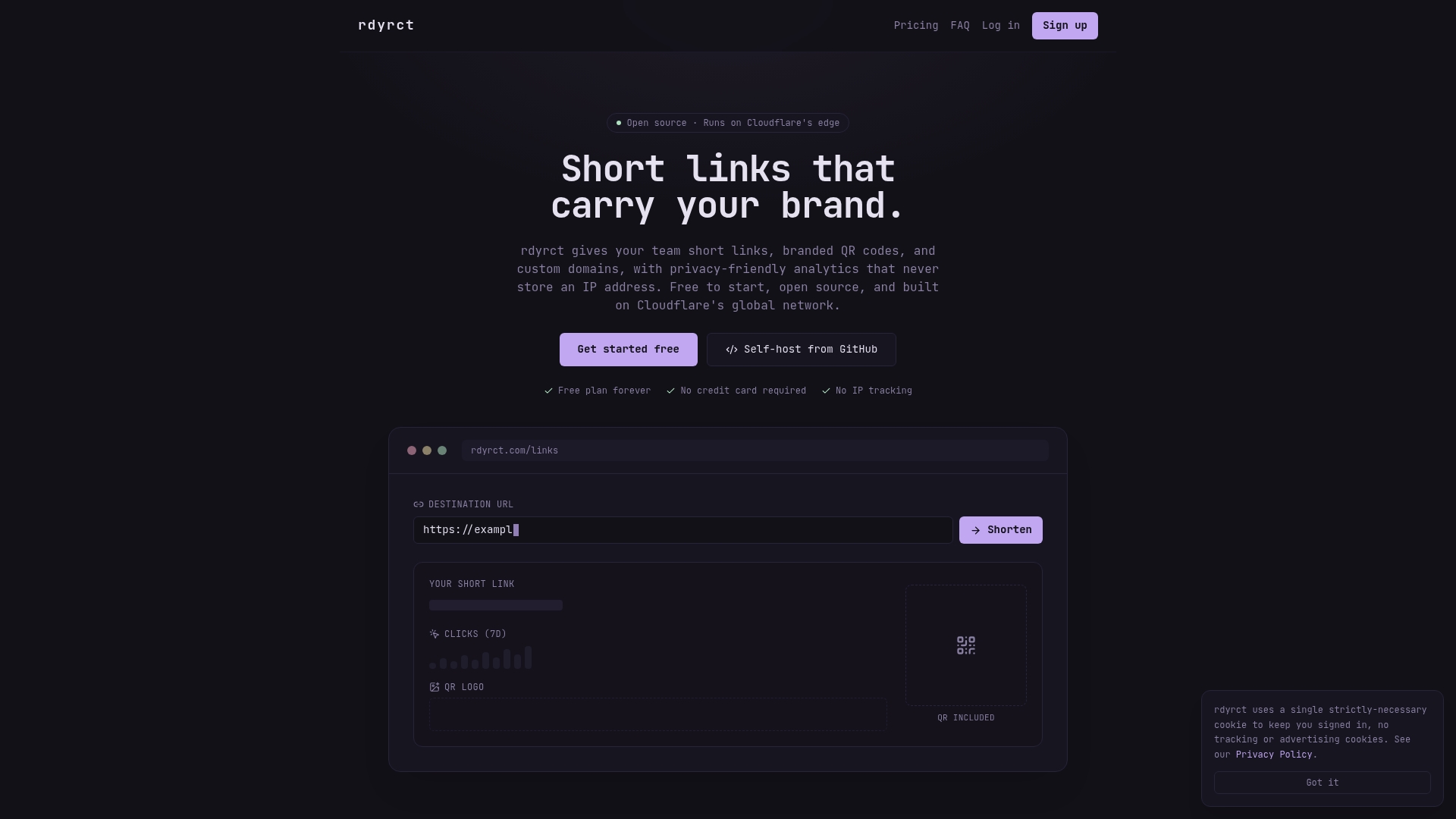
rdyrct builds these principles into the product rather than leaving teams to bolt them on. Role-based access and workspace controls separate who can edit links from who can only view analytics, and analytics themselves stay permissioned rather than open to anyone with a dashboard login.
- Workspace-level roles keep agency clients and internal teams from seeing each other’s links or campaign data.
- Analytics stay privacy-first by design: rdyrct does not store IP addresses, which reduces what needs protecting in the first place.
- There are plans that cover small teams that want role separation without committing to paid tiers.
- A public roadmap shows where permission and collaboration features are headed next.
If your team is ready to set up roles properly, the Free, Hobby, and Pro plans start at $0 with paid tiers at $4 and $9 per month, scaling analytics history and branded features as you grow. Teams that also need QR codes tied to the same permission model can generate them through the QR code generator.
Sources
FAQ
What is the least privilege principle in link permissions?
Least privilege means giving each role only the access it needs, so a marketer who edits campaign links should not automatically get domain or billing controls. The OWASP Authorization Cheat Sheet frames this as both a vertical concern, limiting privilege level, and a horizontal one, limiting access to other teams’ resources.
Why does server-side enforcement matter for short links?
Client-side checks can be bypassed by anyone who can inspect network requests, so authorization has to be verified on the server for every request. The OWASP ASVS access control guidance specifically calls out applying these checks to APIs, bulk actions, and background jobs, not just the visible dashboard.
What should and should not appear in permission audit logs?
Audit logs should capture invitations, role changes, permission grants and revocations, API key events, and failed access attempts, according to OWASP’s error logging guidance. They should never include passwords, session tokens, or IP addresses, which keeps the log itself from becoming a privacy risk.
How often should teams review link sharing permissions?
Permission reviews work best tied to real events rather than a fixed date, such as a new client onboarding, an employee leaving, or a campaign wrapping up. NIST SP 800-53 treats account and access review as ongoing risk management rather than a one-time setup task.
Does rdyrct offer role-based permissions on its free plan?
rdyrct’s Free plan includes workspace-level role separation suited to small teams, with the Hobby and Pro tiers unlocking longer analytics history and additional branded features. Exact feature limits per tier are listed on the pricing page.