Reclaim Hidden Clicks: Privacy First Dark Social Tracking for Marketers
Reclaim Hidden Clicks: Privacy First Dark Social Tracking for Marketers
Dark social tracking is the practice of recovering attribution for content shared through private channels, like messaging apps and DMs, that would otherwise show up as untraceable “Direct” traffic. The fastest fix is deceptively simple: bake UTM parameters into first-party short links and issue a unique one per channel or community before you share anything. Do that consistently and you’ll reclaim attribution that used to vanish into your analytics dashboard’s most misleading bucket.
TL;DR:
- Baking unique UTM parameters into each shared link, especially with channel-specific short links, is the most effective way to recover dark social attribution.
- Dark social traffic often inflates “Direct” numbers, especially on mobile devices and deep content pages, with referral data typically stripped by messaging and in-app browsers.
- Correlating spikes in “Direct” traffic with campaign timing, landing page patterns, and survey data can help estimate the hidden share from private sharing channels.
- Implementing a first-party visitor ID and using privacy-focused link services like Rdyrct enhances attribution without compromising user privacy.
- Consistent tagging, thorough testing across devices, and treating short links as infrastructure improve long-term dark social tracking accuracy.
Table of Contents
- What Is Dark Social Tracking and Why Does It Matter?
- Where Does Dark Social Traffic Actually Come From?
- How Can You Tell If Dark Social Is Hiding in Your Analytics?
- What Are the Best Tactics for Tracking Dark Social?
- How Do You Build a Dark Social Tracking System Step by Step?
- How Do You Track Dark Social Without Violating User Privacy?
- What Tools Actually Support Dark Social Tracking?
- Lessons From Building Privacy-First Link Tracking
- Start Tracking Dark Social With Rdyrct
- Sources
- FAQ
What Is Dark Social Tracking and Why Does It Matter?
Every analytics platform has a category that lies to you. It’s called “Direct,” and it’s supposed to mean someone typed your URL straight into their browser. In practice, a huge chunk of that traffic arrives because someone pasted a link into WhatsApp, Slack, or a text message, and the platform stripped away every clue about where it came from. That’s dark social, a term that gained traction after early industry write-ups from outlets like Chartbeat documented the gap between how people actually shared content and what referral logs were capturing.
The mechanics are straightforward once you see them. A referral header only survives when a link travels through an environment that passes it along, like a public webpage or a properly tagged social post. Copy a link into an email, a text thread, or a private Slack channel, and that metadata usually gets dropped entirely. Your analytics platform sees a visit with no origin, and defaults it to Direct.
Mobile makes this worse. In-app browsers inside messaging apps frequently strip referrer data outright, and research summarized by TrackRev found that visits initiated from apps like WhatsApp often pass along zero referral information. A few patterns tend to signal you’re looking at dark social rather than genuine type-in traffic:
- A spike in Direct sessions immediately following a newsletter send, webinar, or press mention.
- Disproportionately high mobile share among your “Direct” segment compared to your site average.
- Landing pages that are deep product or blog URLs rather than your homepage, which real type-in visitors overwhelmingly favor.
Once you know what to look for, the next question is where this traffic actually originates.
Where Does Dark Social Traffic Actually Come From?
Not all private channels behave the same way, and knowing the difference tells you where to instrument first. Some channels strip everything; others leave partial breadcrumbs if you set things up correctly.
The most common sources of dark social traffic include:
- Messaging apps like WhatsApp, iMessage, and Telegram, which almost universally drop referrer data.
- Team collaboration tools like Slack and Discord, where links get pasted into channels and DMs constantly.
- Email forwards, which lose any tracking parameters that weren’t baked directly into the URL itself.
- In-app browsers inside social and messaging apps, which often override normal referrer behavior even when a link technically came from a trackable source.
- PDFs and shared documents, where a link sits inert until someone clicks it from an entirely different context than where it was published.
- Private groups and communities, including invite-only forums, member portals, and closed Facebook or LinkedIn groups.
Multi-hop forwarding compounds the problem fast. A link posted in a company newsletter gets copied into a Slack channel, then forwarded to a personal WhatsApp thread, then texted to a friend. By the third hop, any referrer context that survived the first jump is almost certainly gone, and the final click looks indistinguishable from someone who bookmarked your site years ago. That’s precisely why UTM parameters baked directly into the URL matter more than referrer headers: a parameter travels with the link no matter how many times it gets copied and pasted.
How Can You Tell If Dark Social Is Hiding in Your Analytics?
You don’t need new software to start estimating your dark social share. You need a few deliberate checks run against data you already have.
- Correlate Direct spikes with campaign timestamps. Pull up your Direct traffic trend line and overlay it against every newsletter send, press hit, or influencer post from the same window. A tight correlation is a strong signal that “Direct” is actually disguised social sharing.
- Check device and landing-page skew. If your Direct segment leans heavily mobile and lands on deep content pages rather than your homepage, you’re likely looking at forwarded links, not people who memorized your URL.
- Segment first-time visitors separately. Returning visitors who type in your domain are far more plausible as genuine Direct traffic. New visitors landing Direct on a blog post are a different story entirely.
- Exclude known type-in patterns. If your homepage or a short, brandable URL dominates your Direct traffic, that’s more consistent with real direct navigation. Flag anything that deviates from that pattern.
- Run a lightweight post-conversion survey. A single “How did you hear about us?” field on your signup or checkout flow, with an option like “a friend or colleague sent me a link,” routinely surfaces sharing behavior that no analytics platform caught.
Statistic to watch: Mailchimp’s breakdown of dark social notes that timestamp correlation and device-level segmentation are among the most reliable heuristics marketers have for estimating how much of their Direct bucket is actually private sharing in disguise.
None of these checks require a new tool. They require you to stop treating Direct as a monolith and start asking what’s actually hiding inside it.
What Are the Best Tactics for Tracking Dark Social?
Once you’ve confirmed dark social is inflating your Direct numbers, the fix comes down to layering a few techniques by cost and complexity. Start cheap, then add sophistication where the payoff justifies it.
Tier 1: Bake UTMs into every canonical share URL. This is the single highest-leverage move available to any team, regardless of size. Every link you put into a newsletter, a Slack announcement, or a community post should carry a campaign-level UTM and, ideally, route through a first-party short link tied to that specific channel. TrackRev’s guide on fixing GA4’s Direct trap recommends exactly this: a unique tracking link per community, paired with campaign-level UTMs on the canonical URL itself, as the fastest way to pull visits out of the Direct bucket.

Tier 2: Set a first-party visitor ID on first arrival. When someone lands via one of your tagged links, drop a first-party, non-identifying cookie or local storage value that captures the initial UTM context. If that person converts three visits later after navigating around your site directly, you can still tie the conversion back to the original channel instead of losing it to “Direct” on visit two.
Tier 3: Use dynamic QR codes for offline and event sharing. A printed flyer, a conference badge, or a physical product insert can’t carry a clickable UTM link, but it can carry a QR code that routes through one. Dynamic QR codes let you swap the destination or update tracking parameters after printing, which matters when a campaign shifts mid run.
Tier 4: Corroborate with post-conversion surveys. No tracking method catches everything, so a short “how did you hear about us” prompt at signup or checkout gives you a second data source to cross-check against your link-level attribution.
- Baked UTMs recover the most volume for the least engineering effort.
- First-party visitor IDs close the gap between first click and eventual conversion.
- QR codes extend tracking into physical and offline contexts.
- Surveys catch what your instrumentation misses, especially word-of-mouth shares with no link at all.
The trade-off across all four tiers is the same: more precision generally means more infrastructure to maintain, and every method needs to respect a hard line around what data you’re actually allowed to collect from a privacy standpoint.
Pro Tip: When you’re setting up channel-specific links, name them by community, not by campaign. A link called “slack-marketing-team” tells you something useful six months from now; a link called “q3-promo-3” does not.
How Do You Build a Dark Social Tracking System Step by Step?
Turning tactics into a working system takes a short, disciplined rollout. Here’s the order that works.
- Inventory every channel where your content gets shared. List messaging apps, internal tools, email newsletters, private communities, and any recurring offline touchpoint like events or printed materials.
- Assign one short link per channel. Don’t reuse a single link across Slack, email, and a private Facebook group. Each needs its own identity so you can tell them apart later.
- Standardize your UTM schema before you launch anything. Decide on consistent naming for
utm_source,utm_medium, andutm_campaignand document it somewhere your whole team can reference, including a stable campaign-level hash that maps back to channel identity without exposing personal data in the URL itself. - Deploy a first-party pixel or cookie that captures initial context on arrival. This is what lets you connect a visitor’s first touch to a conversion that happens later, potentially through a completely different, untagged path.
- QA everything before you trust the data. Forward a test link mobile to mobile across three hops and confirm it still resolves correctly. Test it inside an in-app browser, not just a standard mobile browser, since that’s where referrer stripping is most aggressive.
Once the system is live, your reporting needs new fields to make it useful:
- Channel-assigned share volume, broken out by community or platform.
- Conversion rate and revenue attributed back to each tagged channel.
- Lifetime value comparisons between dark-social-sourced customers and traditionally attributed ones.
How Do You Track Dark Social Without Violating User Privacy?
Recovering attribution and respecting privacy aren’t in conflict, but the wrong implementation choices can make them feel that way. The goal is capturing channel identity, not personal identity.
A few concrete guardrails keep this honest:
- Use first-party, non-identifying cookies rather than third-party tracking pixels that follow users across unrelated sites.
- Never store IP addresses as part of your link analytics stack. You don’t need them to know that a link performed well in your customer Slack versus your public newsletter.
- Document exactly what your short links capture in your privacy notice and cookie policy, in plain language, not legal boilerplate nobody reads.
- Report in aggregate wherever possible. “This channel drove 340 clicks and 12 conversions” is useful. Tracking individual click paths tied to a real identity usually isn’t necessary to get that answer.
Consentless analytics approaches built around campaign context rather than personal identifiers let you keep the attribution signal you need without asking users to accept a cookie banner just to click a link a friend sent them. That distinction, tracking the channel instead of the person, is what separates a privacy-first setup from the kind of cross-site tracking that’s drawn regulatory scrutiny for years. Where consent frameworks genuinely require opt-in, use consented tracking; where you’re only capturing campaign-level context with no cross-site identifier, a cookieless approach is often sufficient.
What Tools Actually Support Dark Social Tracking?
You don’t need an enterprise martech stack to run this playbook, but a few categories of tools make the work considerably lighter.
- Privacy-first short link services that show channel identity, click feeds, and basic device and referrer data without harvesting IP addresses or cross-site identifiers.
- Dynamic QR code generators for print and event materials, so a UTM-tagged link can live on a badge, flyer, or storefront sign.
- Post-conversion survey widgets embedded directly into your checkout or signup flow to corroborate what your link data shows.
- Lightweight analytics integrations that tie click-level data back to your billing or CRM system, so a channel’s contribution to actual revenue is visible, not just its click count.
Small teams generally do fine stitching together a short link service and a simple survey field. Larger organizations tend to add the revenue tie-back layer once the volume of tagged links justifies the engineering time.
Lessons From Building Privacy-First Link Tracking
The mistake I see most often isn’t a lack of effort. It’s inconsistency. Teams roll out UTM tagging for one campaign, get it right, then let a different department launch its own scheme with different naming conventions three months later. Now nothing rolls up cleanly, and the dashboard looks worse than if nobody had tagged anything at all.
The second mistake is skipping in-app browser testing entirely. A link that resolves perfectly in Safari can behave differently inside Instagram’s or LinkedIn’s built-in browser, and that’s exactly where a lot of dark social traffic actually lives.
The teams that get real value from this work are those who treat first-party short links as infrastructure rather than a one-off tagging exercise, and who avoid collecting more personal data than necessary for attribution.
— Andrea
Start Tracking Dark Social With Rdyrct
This URL shortening service provides branded short links with a built-in UTM builder, privacy-focused analytics that do not store IP addresses, and dynamic QR codes for offline channel tracking.
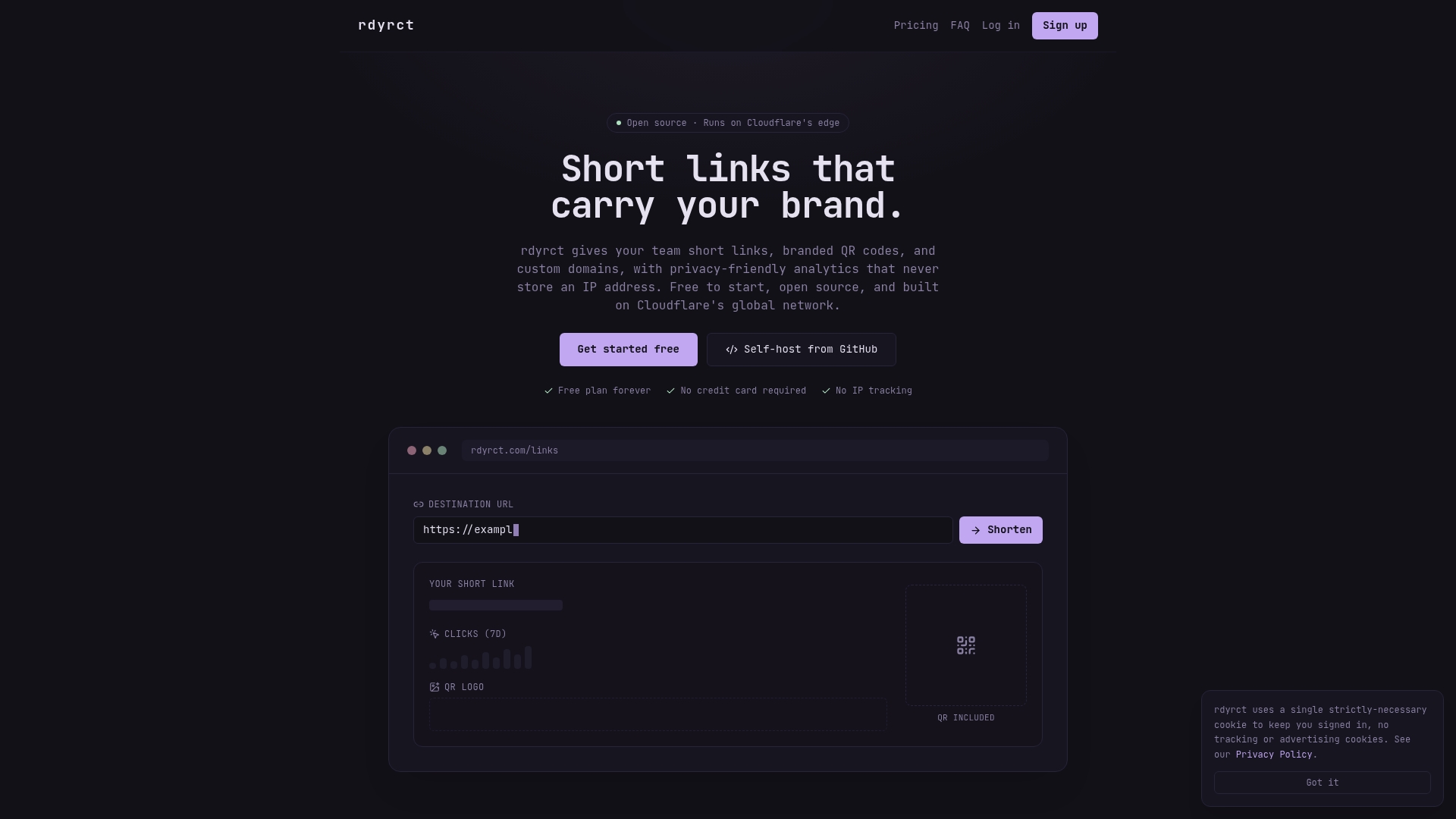
Rather than guessing where a click came from, you get referrer, device, and country-level detail on every link, tied to the exact channel you tagged it for. A useful first move: create one short link for a specific Slack community or newsletter segment, share it, and run a quick forward test to confirm it holds up across a few hops before rolling the scheme out further. If you want to try the QR side of this without committing to anything, the free QR code generator works with no account required. When you’re ready to run this across every channel your team shares to, the Free, Hobby, and Pro plans scale from $0 to $9 a month depending on how much volume and history you need.
Sources
The definitions and detection tactics in this piece draw on foundational work from Mailchimp’s dark social resource, TrackRev’s GA4 attribution guide, and the Wikipedia entry on dark social media for historical framing. For implementation depth, Rdyrct’s UTM guide covers link hygiene in more technical detail, and AMAUTA’s trust analytics piece is worth a look for teams thinking through governance.
- Dark Social: The Hidden Side of Online Traffic | Mailchimp
- Dark Social Attribution: Fix GA4’s “Direct” Trap · TrackRev
- Dark Social (archived Chartbeat blog)
FAQ
What Does “Dark Social” Mean?
Dark social refers to content shared through private, unmeasurable channels like messaging apps, email, and DMs, where referral data typically doesn’t survive the share. That traffic then shows up in your analytics as “Direct” even though a real referral source exists, as Mailchimp explains in its overview.
What Is the 5-3-1 Rule for Social Media?
The 5-3-1 rule is a content planning guideline: for every nine posts, share five pieces from other sources, three original pieces of your own, and one purely promotional post. It’s a content-mix framework rather than a tracking method, so it doesn’t directly address dark social attribution.
What Is the Best Way to Track Hidden Social Referrals?
There’s no single “best app” for this since it depends on your stack, but the most reliable approach combines a privacy-first short link service, baked UTM parameters, and a first-party visitor ID set on arrival. Rdyrct provides the short link and UTM layer of that setup with analytics that avoid storing IP addresses.
What Is the 5-5-5 Rule for Social Media?
Definitions of the 5-5-5 rule vary depending on the source, and it isn’t a framework this article’s research covers in enough depth to state a canonical version confidently. Treat any specific claim about it with some skepticism until you’ve checked the original source.
How Much Does Rdyrct Cost?
Rdyrct offers a Free plan at $0, a Hobby plan at $4 per month, and a Pro plan at $9 per month, each unlocking more branded links, QR codes, and analytics history. Full plan details are available on the pricing page.